

Let’s make levels, rules, and judging simple.
You know your dancers better than anyone. Our goal is to give you clear guidelines so you can confidently place your dancers, understand how they’ll be evaluated, and know what to expect when they take the LEAP stage.
You don’t need to memorize the entire rulebook.
Here are the things we think every Studio Director should know.
FINDING THE RIGHT LEVEL
LEAP welcomes dancers with a wide range of competition experience and training.
When registering, Studio Directors and teachers assign each dancer's competitive level. The current LEAP rules ask studios to consider not only training and competition experience, but also the dancer's actual skill level and the difficulty of the choreography being performed.
For 2027, LEAP uses five levels:
SKIP LEVEL
Beginner
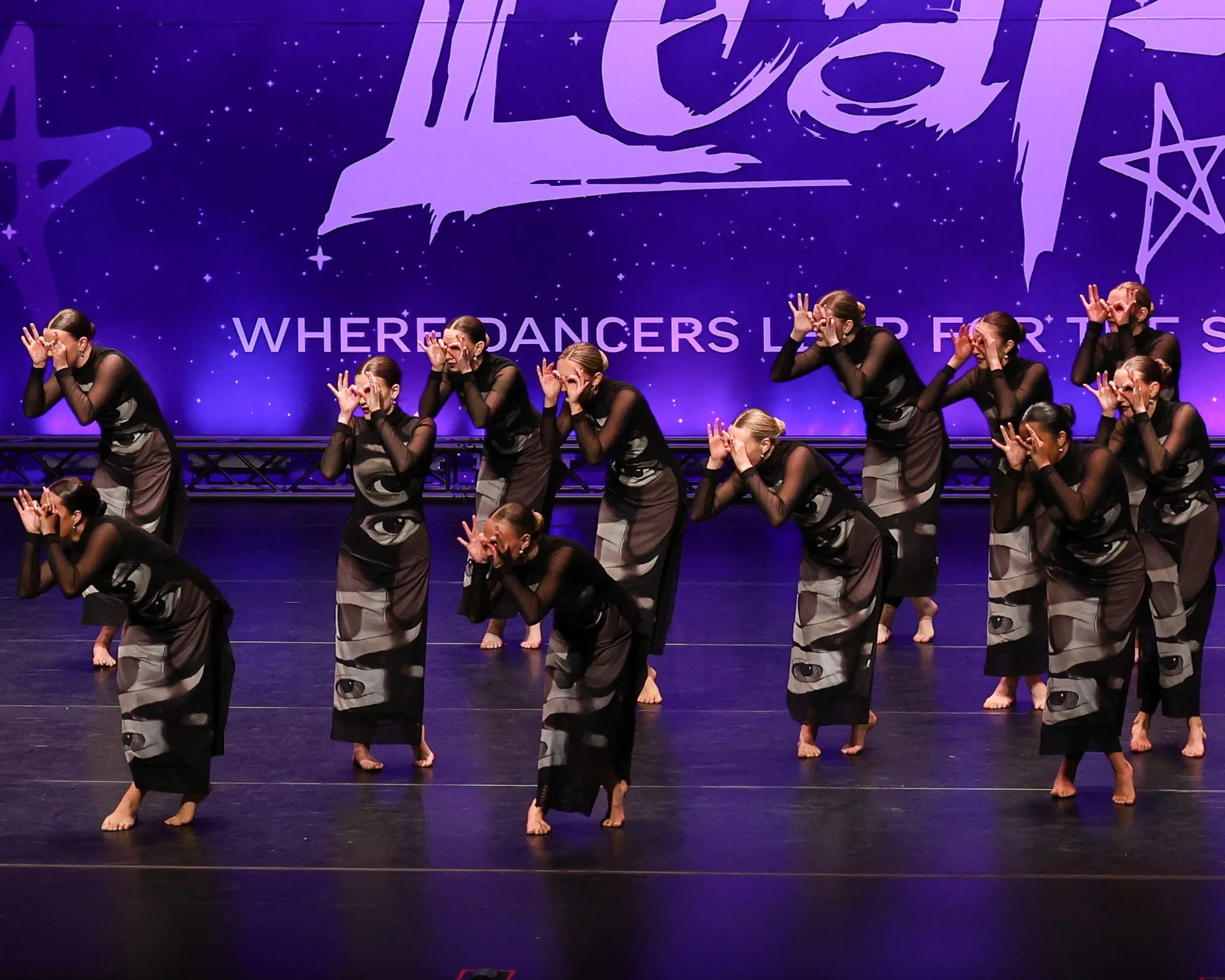
Designed for recreational dancers with little or no competition experience who train less than three hours per week.
JUMP LEVEL
Intermediate
Designed for dancers with limited competition experience performing at a level expected of dancers training approximately 3–5 hours per week.
LEAP LEVEL
Advanced
Designed for dancers with significant competition experience performing at a level expected of dancers training more than five hours per week.
STAR LEVEL
For routines including dancers with exceptional mental and/or physical abilities or dancers with special needs.
ADULT LEVEL
For applicable routines containing a dancer age 20 or older.
WHEN DANCERS OF DIFFERENT LEVELS PERFORM TOGETHER
Mixed-level routines? We have guidelines for that.
Your dancers' individual levels help determine where their duos/trios and groups compete.
Under the current LEAP rules:
SOLOS
A dancer performs all solos within their assigned competitive level.
DUOS/TRIOS
The routine competes at the level of its highest-level dancer.
GROUPS
The routine generally defaults to the level represented by the majority of its dancers. If there's an equal split, it defaults to the higher level.
Studios may also choose to move a routine up a level, but routines cannot be moved down. Any dances with an adult dancer must compete in the adult division with the exception of one adult dancer in a production.
Have a mixed-level routine? Review the Competitive Level Placement section of the full rules before finalizing your registration.
Different backgrounds. One goal: meaningful feedback.
LEAP's judging panels are currently described as a mix of championship-caliber Studio Directors, professional dance instructors, and performing dance professionals.
Judges are trained across multiple genres, with the variety of experience and performing-arts backgrounds intended to provide dancers with a diverse range of feedback.
LETS MEET TANYA

How are LEAP judges selected?
Prospective judges complete a thorough selection process before joining our panel. We consider the strength of each candidate’s résumé and training. We look for candidates with industry experience; those working as professional artists or esteemed teachers and choreographers at highly accredited studios. We also ensure Spotlight Events has multiple judges versed in all genres of dance including Tap and Hip Hop.
Once resumes have been reviewed, we ask candidates to perform sample critiques to ensure they can adjudicate all levels and styles. The final step is to conduct an interview to assess whether the candidate aligns with our Company's Core Values & mission.
Why does a well-rounded judging panel matter?
A well-rounded judging panel includes professionals who can evaluate multiple dance styles across a range of ages and division levels. We aim for varied perspectives, such as a judge with a teacher perspective and a judge coming with a commercial industry perspective. We also ensure that we are bringing specialty judges based on the market of each event.
What kind of feedback do we expect judges to give dancers?
We expect our judges to stay actively engaged throughout the whole routine and give a balanced, insightful critique filled with constructive feedback to help educate your dancers on ways to improve and positive reinforcement to motivate them to continue the hard work they are doing. Judges should be providing feedback on each portion of the scoresheet to justify the placement level given so the dancers have a better understanding of how they can continue to improve. We want to inspire the next generation of dancers to be the best that they can be.
WHAT ARE THE JUDGES LOOKING FOR?
Five areas. One complete performance.
Every effort is made to provide feedback in five main areas:
TECHNIQUE - 30 POINTS
The technical foundation and execution of the movement.
EXECUTION - 25 POINTS
How successfully the dancers perform the choreography.
PRESENTATION - 25 POINTS
Performance quality and how the routine is communicated onstage.
CHOREOGRAPHY - 10 POINTS
The construction and effectiveness of the routine.
DIFFICULTY - 10 POINTS
The level of challenge presented in the choreography.
Under the current system, three judges each score routines on a 100-point scale.
A FEW RULES WORTH READING
We’ll highlight what matters. The full rules are still your source of truth.
Before competition weekend, we recommend taking a few minutes to review the sections most likely to affect your studio:
Competitive Levels + Level Placement
Age Categories
Group Sizes + Time Limits
Performance Categories
Props + Safety
Music Procedures
Scoring + Awards
BEFORE YOU MOVE ON...
A quick competition check:
□ My dancers are entered at the appropriate competitive levels
□ I've reviewed how mixed-level routines are placed
□ I know the five areas judges evaluate
□ I've bookmarked the full LEAP Rules
Still unsure about a placement?
COMING UP NEXT
STOP 04 - KNOW YOUR EVENT
Every LEAP weekend is a little different.
Next, we'll show you where to find the information specific to your event—including important dates, venue information, hotel details when applicable, and event updates.